Too many SaaS tools: a debt nobody sees
Take a service business with 30 people. You’ll often find the same setup: a CRM (sales tracking software), an invoicing tool, Notion (or Confluence), Slack, Google Drive or OneDrive, an e-signature tool, HR software, a support ticketing tool, two or three spreadsheets that are “the source of truth,” and an old piece of industry software that predates Snapchat.
That’s a dozen online subscription tools (the famous SaaS), sometimes more.
Each one, taken alone, is good. None of them is at fault. The problem is that they don’t talk to each other. And every day, your team pays for that silence: in lost time, in duplicates, in mistakes.
4 signs your tools have become a burden
1. Double entry has become a job. When someone creates a customer in the CRM, they have to create it again in the invoicing tool, in the shared drive (a dedicated folder), and sometimes in a tracking spreadsheet. Say it takes five minutes per customer: with 200 new customers a year, that’s close to 17 hours a year of pure data entry. And that’s just one task among many, not counting copy errors and records that drift apart over time.
2. The numbers never add up. How many active customers do you have? For example: the CRM says 312, invoicing says 287, the tracking spreadsheet says 296. None of them is right, because none is updated the same way.
3. New hires take weeks to find their way around. Not to learn the job: to understand which tool each piece of information goes into, who can change what, and where to find the brief for client X that nobody can locate.
4. You steer by instinct. Everyone feels the business is growing, but nobody really knows where, or where margins are slipping. Management reports are rebuilt by hand every month, with a lot of copying and pasting into Excel.
The real cause: not too many tools, but nothing to coordinate them
The usual reflex is to replace everything: “What if we switched to HubSpot, which does it all? Or Odoo, which is all-in-one?”
That’s rarely the right idea. Each tool was chosen for a good reason, at some point. Your CRM probably suits your salespeople. Your invoicing tool suits your accounting. Your HR software is in place and your team knows how to use it.
The problem isn’t that you have twelve tools. The problem is that there’s nothing on top to coordinate them.
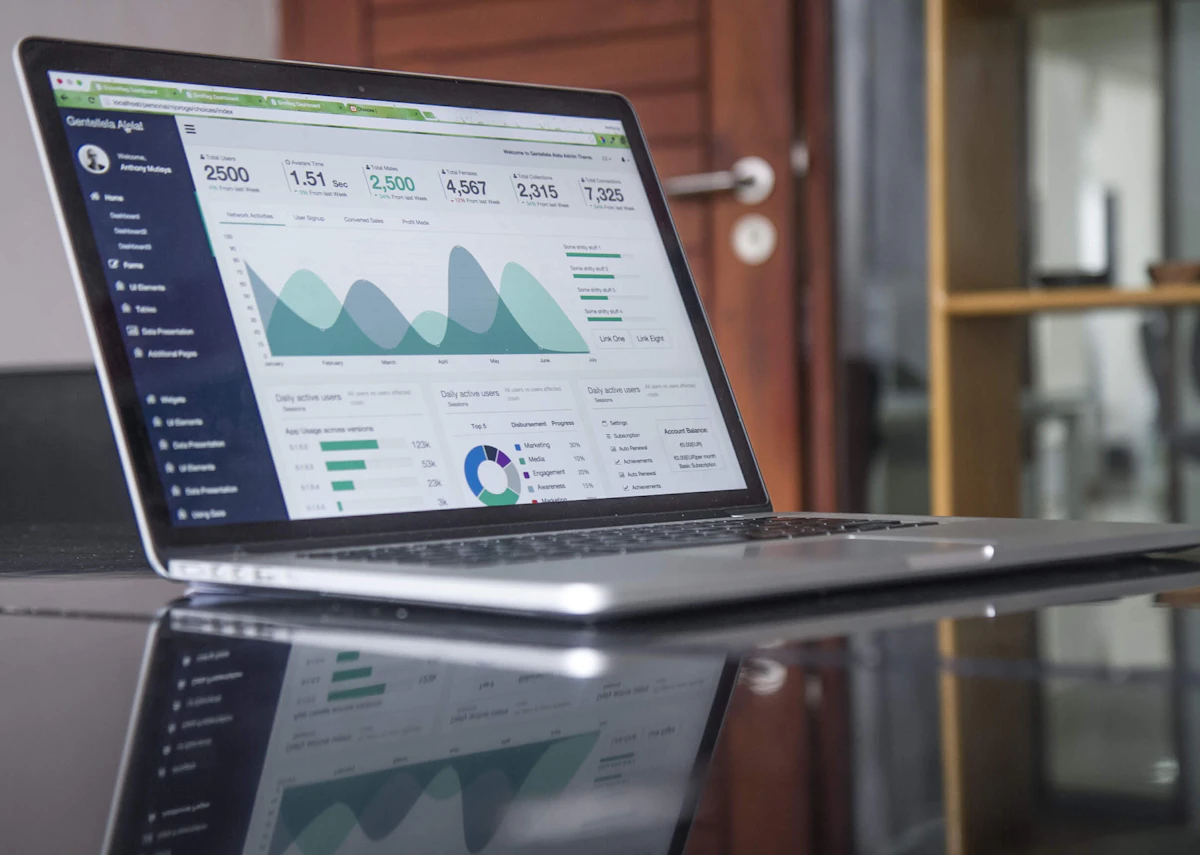
That’s what we call a platform at Novidade. Not one more tool: a layer that connects your existing tools, reads from and writes to each of them (through their APIs, the entry points most software provides), and gives your team one consistent screen, with your name on it.
What it looks like in practice
Take an example: a 25-person consulting firm that works with eight tools (CRM, invoicing, project management, e-signature, HR software, shared drive, spreadsheets, Slack). Its consultants spend hours every week retyping information and preparing reports, and a new consultant takes weeks to find their way around.
With a platform, these tools stay in place (except the ones that overlap, which can be retired). But they’re connected behind the scenes. Consultants work from one screen, with the firm’s name on it, that shows them the right information at the right time:
- the list of current projects, with live profitability
- time tracking in the same place (no need to switch tools)
- each project’s documents, available from its record
- client reports prepared automatically from the real data
What changes: information entered once, the same numbers for everyone, and new hires who find everything in one place.
How we work (the short version)
-
We follow the path of your information. We map the five most painful flows: what information starts where, goes where, and passes through whom. And we measure how much time they really cost you.
-
We check that each tool can be connected. Most software has an entry point (an API). If an important tool doesn’t, we flag it as one to replace someday, not necessarily right away.
-
We build the platform. Custom-made, in your colors, with your ways of working and your rules. Not a generic product we tweak.
-
We switch over gradually. Tool by tool, team by team. Your business never stops.
-
We measure. Time saved, errors avoided, feedback from your team: that’s what tells you whether the project delivered on its promises.
A first project is delivered in 10 to 25 days, and you see a first concrete preview in the first week.
What it costs, what it brings in
The price depends on how many tools need connecting and what the platform has to do: we give you a quote after the first call, before you commit to anything. Quotes are in euros.
To compare it with what your current setup costs you, do the math: add up your monthly subscriptions, then add the hours spent each month on double entry and hand-built reports, multiplied by your team’s hourly cost. That’s the amount a platform brings down.
Next steps
If this sounds like your business, there are two ways to start:
- Our free assessment (3 minutes) gives you a clear picture of your technical debt and shows you where your weak spots are.
- Or a first call (30 minutes, free): we look at your current tools together and identify the two or three priorities.
To see what we build for businesses like yours: service businesses.